
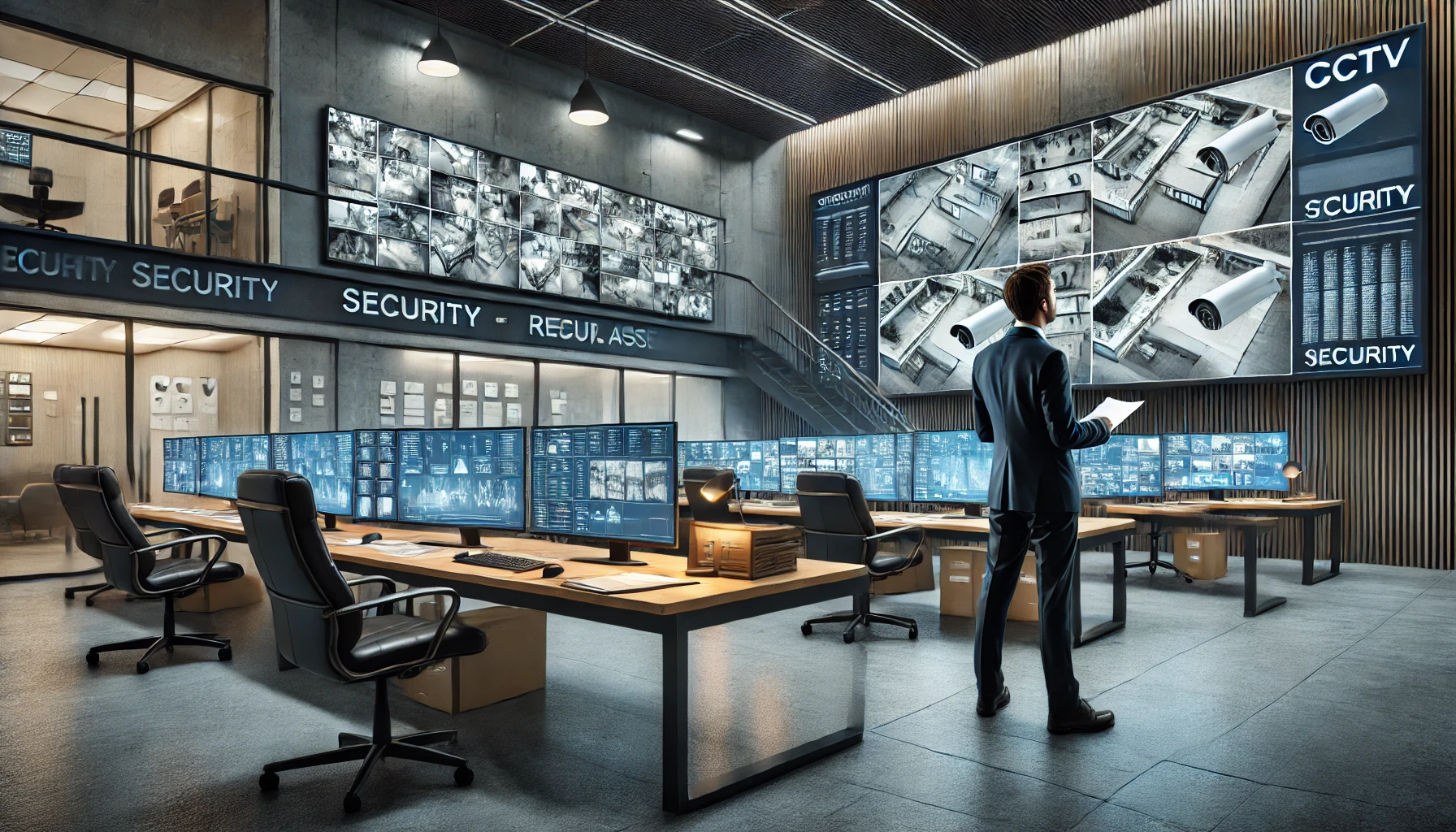
The Role of an Independent Security Risk Assessor
In today’s complex security landscape, a well-designed CCTV system tailored to specific risks is essential for businesses, estates, and public facilities, providing deterrence, monitoring, and rapid response. Yet, designing an optimal CCTV system requires more than simply installing cameras in busy areas. To truly enhance security, a system must be planned based on a thorough Security Risk Assessment (SRA) conducted by an independent security risk assessor. This article explores how such an expert can help you, as the client, to design a customized, high-functioning CCTV system that meets your specific security needs.
We recently conducted an independent security risk assessment for a school in Bloemfontein, exposing vulnerabilities that are often missed by conventional assessments. Our independent approach enabled us to recommend practical measures to improve the safety of students, staff, and property.
If you would like to learn more about our assessments or have specific topics you would like us to address, please email your suggestions to andre@alwinco.co.za. We will create and publish articles tailored to your interests on our website.
An independent security risk assessor offers impartial expertise, comparable to a vast library of knowledge on security and crime.
They focus exclusively on identifying and addressing security risks without any agenda to sell specific equipment or services. This independence ensures that the recommendations you receive are tailored exclusively to your needs rather than biased by product affiliations. A qualified assessor has experience across various sectors, from residential to corporate, and possesses deep knowledge of current and emerging security risks. They assess your environment, considering risks, crime data, and layout to design a CCTV system that delivers meaningful results.
The Importance of a Security Risk Assessment.
A Security Risk Assessment is the foundation for designing a security and CCTV system that aligns with the actual security risks of a given environment. During an SRA, the assessor assesses both internal and external threats, identifies high-risk areas, and considers the daily activities that influence security. Capturing evidence and data for data mining.
In a thorough SRA, the assessor investigates a range of factors:
• Geographic risks: Natural surroundings, like thick foliage, secluded areas, or proximity to public spaces, all influence security risks.
• Neighborhood: This is the area surrounding your property and is taken into consideration. Crime starts and ends in the neighborhood. The neighborhood plays a massive role in the design of your security.
• Physical Layout: Building entrances, corridors, parking areas, and other strategic locations are assessed to determine where cameras should be installed.
• Traffic Flow and Behavior Patterns: Knowing how employees, residents, or customers move through a space helps pinpoint areas that require monitoring.
• Past Security Incidents: Reviewing past incidents can help reveal patterns that require attention.
• Control
An SRA provides a roadmap that allows for the design of a CCTV system specifically tailored to mitigate identified risks.
Without this structured assessment, CCTV installations may end up either excessive or insufficient, failing to address actual security risks effectively.
Designing a CCTV System with Insight from a Security Risk Assessment
The process of translating the findings of an SRA into a practical CCTV design involves multiple key steps. Each step ensures the CCTV system is comprehensive and aligned with the unique requirements of your property. Using experience from previous assessments, property, and management styles.
Identifying Critical Areas for Coverage
Based on the SRA findings, the assessor will determine high-risk areas where CCTV monitoring is essential. This could include entry and exit points, stairwells, lobbies, loading docks, or any area identified as vulnerable to unauthorized access or high-value asset storage. We prioritize these locations to maximize surveillance effectiveness.
Determining camera types and specifications.
Not all CCTV cameras are suited for every purpose.
- The assessor will recommend appropriate camera types—whether fixed, dome, or PTZ (pan-tilt-zoom) cameras—and specify essential features such as thermal, camera resolution, and field of view. For instance, in dimly lit areas, infrared cameras may be necessary to capture clear images. In areas with high-foot activities, high-resolution cameras with a broad field of view ensure clear and complete monitoring.
- Optimizing Camera Placement and Angles
An independent assessor will position cameras using the SRA’s findings to ensure full coverage without blind spots. This strategic placement covers vulnerable areas from multiple angles, minimizing concealment opportunities and enhancing overall visibility. - Integrating Advanced Features for Enhanced Security.
Depending on the level of risk identified, the assessor may recommend additional CCTV features, such as
• Motion Detection: Triggering alerts for suspicious movement.
• Facial Recognition: Useful in settings where access control is critical.
• Different Remote Monitoring: Allowing for real-time oversight from a control room or mobile device.
• Analytics Integration (Ai): Providing valuable data insights, like heat mapping and behavior tracking, to improve security strategies further.
When deployed based on risk assessment data, these technologies enhance the CCTV system’s functionality, making it responsive and proactive.
Establishing Maintenance and Operational Guidelines
To ensure the system remains effective, regular maintenance is critical. The independent assessor will typically outline maintenance protocols, including periodic checks, camera cleanings, and software updates. They may also recommend best practices to ensure compliant footage storage and proper operator training for effective system use.
The Value of an Objective, Risk-Based CCTV Design
Therefore, designing a CCTV system that effectively addresses specific risks provides significant advantages.
A risk-based approach customizes each aspect of the system—coverage, technology, placement, and functionality—to suit your environment. This precision enhances security and uses resources more efficiently by installing cameras only where necessary. Additionally, an independent risk assessment-driven design is typically more adaptable, allowing for future upgrades that address evolving threats.
Conclusion
Newsletter subscription
Should you wish to learn more about our services offered or want more information on security risk assessments, please send us an email or kindly visit our website security meetings and subscribe to our Newsletter.
Article written by Andre Mundell, independent security risk advisor at Alwinco. # Independent Security Risk Assessor.
Our services for security risk assessment cover major cities like JHB, Durban, Camps Bay, and Gauteng (which includes Arcadia, Johannesburg, Midrand, Sandown, and Centurion).